
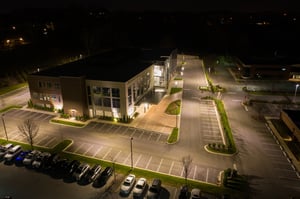

Exterior lighting is one of the most visible signals of how a property is managed. When parking lots, walkways, entries, and perimeter zones are dim or inconsistent, it impacts three things fast: safety risk, customer confidence, and brand perception.
RAM’s lighting analysis helps facilities teams see lighting performance across sites, pinpoint dark zones, and prioritize fixes with data, not guesswork.
Why lighting matters more than most teams think
People change behavior when lighting feels unsafe
In a 2024 survey of U.S. consumers, parking lots and garages were where people felt least safe, and “poor lighting” was the top parking lot safety concern (especially among women).
Translation: lighting is not just maintenance, it is customer decision-making.
Brand perception is built in the first 30 seconds
Before someone experiences your service, they experience your property. Dim lots and shadowy walkways create a “this place is neglected” impression. That affects retailers, healthcare campuses, education facilities, industrial sites, stadiums, and multi-family communities the same way.
Better lighting can reduce real-world risk
Research on improved outdoor lighting shows measurable reductions in nighttime crime in some settings. For example, analysis of NYC public housing lighting found a sizable drop in nighttime crime after upgrades.
Broader reviews also conclude improved street lighting can be an effective part of crime reduction strategies, though results vary by location and implementation.
“Who shops at night” and why it still matters
Night shopping is often a smaller share of total traffic, but it is high-impact traffic: after-work runs, late shifts, winter darkness, emergencies, and convenience trips.
- Consumer research commonly shows evenings are the lowest shopping window, with one survey reporting less than 6% of respondents prefer “evening.”
- Even if that percentage is small, it is frequently your highest-risk time window (lower visibility, fewer staff outside, more vulnerable pedestrians).
So the goal is not “optimize for night shoppers only.” The goal is “remove a friction point that keeps people away and reduces risk exposure.”
What RAM lighting analysis delivers for facilities managers
A portfolio-wide view, not a site-by-site guessing game
Facilities teams usually learn about lighting issues via complaints, incident reports, or night drive-bys. That is reactive and inconsistent. RAM lighting analysis makes it measurable and comparable across locations, so you can answer:
- Which sites have the largest low-light zones?
- Where are entrances, sidewalks, or perimeter areas underperforming?
- Which repairs deliver the biggest safety and perception improvement first?
- How does performance change after upgrades?
A clean path from data to action
You can turn results into a prioritized work plan:
- Immediate safety fixes (critical dark zones, outages)
- Short-term corrections (aiming, fixture replacement, controls)
- Longer-term upgrades (LED conversions, uniformity improvements)
Support for standards-driven decisions
Industry guidance commonly references minimum illumination targets for parking areas and security conditions (measured in footcandles), plus uniformity expectations.
RAM’s value is not just to collect data, but help you align spend to risk, standards, and visibility outcomes.
Leadership Highlight
Lighting analysis supports:
- Fewer incidents and liability exposure
- Better customer and tenant confidence
- Stronger brand perception (properties look cared for)
- Smarter budgeting (fix what matters most first)
- Better contractor accountability (verify improvements)
Closing Though
Most facilities teams already invest in roofs, pavement, and preventive maintenance because small issues become expensive ones. Lighting is the same. The difference is lighting also impacts human behavior immediately, including whether people choose to enter, return, or recommend a location.