
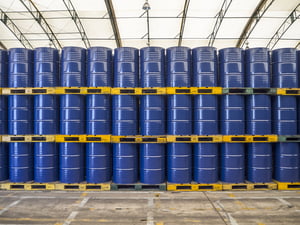

Oil prices influence commercial roofing costs. RAM Companies explains how roof condition data supports project scoping, budgeting, and capital planning.
Material price changes can alter a roof project budget before work begins. Petroleum-based inputs, production energy, and transportation all contribute to commercial roofing costs. For facility leaders managing multiple buildings, those changes add uncertainty to capital plans that may already rely on incomplete roof condition information.
RAM Companies helps organizations connect commercial roofing costs to documented asset needs through roof moisture intelligence. Understanding material exposure is useful. Understanding which roof areas require intervention gives facility managers a stronger basis for deciding what to fund, what to investigate, and what can remain under monitoring.
Key Takeaways: Oil Prices and Commercial Roofing Costs
- Petroleum-derived materials, manufacturing energy, and transportation can affect roofing costs, but price changes vary by product and supply conditions.
- Membranes, asphalt systems, insulation, coatings, and metal have different cost exposures that should be evaluated within the complete project scope.
- Documented roof conditions help owners evaluate targeted intervention and replacement without allowing market pressure alone to determine project scope.
- RAM Companies provides roof moisture intelligence that supports field validation, repair prioritization, and defensible capital planning across facility portfolios.
- Condition-based planning connects project timing to asset risk while keeping budget assumptions, quote validity, and material exposure visible to decision-makers.
How Oil Prices Influence Commercial Roofing Costs
Oil price changes can influence roofing budgets through raw materials, production costs, and delivery. Many commercial roof components contain petroleum-derived ingredients. Asphalt-based products have a direct connection to refining, while synthetic membranes, insulation components, adhesives, and coatings depend on chemical supply chains.
Transportation creates another layer of exposure. Materials may move between manufacturers, distributors, and project sites before installation. Fuel-related charges can change the delivered cost even when a product's quoted base price remains unchanged.
Oil prices alone do not determine the final bid. Labor, availability, regional demand, installation requirements, and project complexity also matter. Facility leaders should separate material assumptions from the broader scope rather than apply one escalation percentage to every roofing project.
Why Roofing Systems Respond Differently to Cost Pressure
Roofing systems respond differently because their ingredients, manufacturing processes, and supply chains differ. Petroleum exposure is one factor in that response, not a reliable formula for predicting the next price adjustment.
- Single-ply membranes: TPO, PVC, and EPDM depend on synthetic polymers or rubber compounds. Pricing also reflects manufacturing capacity and product demand.
- Asphalt-based systems: Built-up roofing and modified bitumen rely on asphalt, with additional costs tied to reinforcement, modifiers, and installation.
- Polyiso insulation: Petrochemical ingredients and chemical availability can affect insulation costs independently of membrane pricing.
- Coatings and adhesives: Formulations differ, so cost exposure varies across resins, binders, sealants, and accessory products.
- Metal roofing: Metal prices have their own drivers, while manufacturing energy and freight create indirect exposure to fuel costs.
System selection should account for documented roof conditions and performance requirements alongside pricing. Roofing design services help connect those requirements to a practical project scope.
Roof Condition Data Helps Define the Right Project Scope
Roof condition data helps determine where investment is warranted before material prices are applied to a scope. A full replacement based only on age can overlook serviceable areas. Deferral based only on budget pressure can overlook developing moisture intrusion.
Roof moisture scans identify thermal patterns associated with suspected moisture beneath the membrane. Those findings guide additional investigation and help distinguish localized concerns from more extensive roof assembly deterioration.
Moisture findings must be considered with surface condition, system compatibility, and other project requirements. Dry areas alone do not establish that a roof is suitable for restoration or that replacement can be deferred.
A documented assessment supports a more precise decision: investigate identified areas, evaluate targeted intervention where appropriate, and plan replacement where the overall condition warrants it. That is the foundation for defensible capital decisions.
How RAM Turns Roof Moisture Intelligence Into Planning Decisions
RAM Companies translates aerial observations into roof condition information that supports validation and planning. Our aerial infrared thermography uses fixed-wing aircraft to capture thermal patterns across commercial roofs without requiring roof access during aerial collection.
Under suitable conditions, moisture-retaining areas release heat differently from surrounding dry materials. Inspection timing, weather, and roof assembly characteristics affect interpretation. Thermal anomalies identify areas for investigation rather than independently proving the cause or required repair.
Our scans and analysis organize observations into imagery and reporting that locate suspected moisture areas. Field validation, including visual roof inspections and appropriate additional investigation, adds the context needed to evaluate intervention.
The result is a documented sequence from observation to confirmation to recommended action. Facility leaders can trace the rationale behind a scope instead of relying on a replacement assumption.
Building a Capital Plan Around Documented Roof Conditions
A condition-based capital plan ranks work by documented risk and operational importance, then tests that scope against budget and procurement assumptions. Standardized reporting makes those comparisons more consistent across buildings.
RAM Companies supports this process with roof condition reporting and capital planning information. Useful roof data deliverables connect identified areas, investigation findings, and recommended actions to decisions that facilities and finance leaders can review together.
For each proposed project, the plan should record:
- The documented condition and consequence of delaying intervention.
- The scope rationale and alternatives evaluated.
- The timing, quote validity, and material pricing assumptions.
- The monitoring or reassessment required if work is deferred.
This structure keeps price uncertainty visible without allowing it to replace condition assessment. Higher costs do not automatically justify delay, and anticipated increases do not automatically justify replacing a serviceable roof.
Start With Data Before Committing Roof Capital
Documented roof conditions give facility leaders a practical way to manage decisions when material costs fluctuate. The controllable starting point is the scope: what needs attention, why that intervention is appropriate, and how it fits the portfolio's priorities.
Our aerial data services provide an upstream intelligence layer for that process. Combined with validation and planning, condition information helps owners evaluate targeted work and necessary replacements without overstating what a scan alone can establish.
Contact RAM Companies to discuss a condition-based assessment for your facility or portfolio before committing the next roofing budget.
Start With Data. Move Forward With Confidence.
FAQs About Roofing Costs and Condition-Based Planning
How do oil prices affect commercial roofing costs?
Oil prices can affect petroleum-derived materials, production energy, and freight. The effect varies by product and supplier conditions. A material increase also differs from an increase in the total installed project cost, which includes labor, equipment, and scope-specific requirements.
Should higher material prices change roof replacement timing?
Higher prices should prompt a review of budget assumptions, not determine replacement timing alone. RAM Companies provides condition information that helps facility leaders evaluate risk and scope. Deferral requires documented justification and a monitoring plan, while necessary intervention should remain tied to asset condition.
Can moisture mapping establish that targeted repairs are suitable?
Moisture mapping identifies areas that warrant investigation, but it does not establish repair suitability by itself. RAM Companies combines aerial findings with validation and assessment. System condition, compatibility, and project requirements must support the decision to repair, restore, or replace.
How does roof intelligence support portfolio budgeting?
Roof intelligence gives portfolio leaders a consistent basis for comparing documented needs across buildings. RAM Companies organizes condition information to support prioritization and capital planning. This helps facilities and finance teams discuss scope, timing, and risk using the same evidence rather than age-based assumptions.